


Goal setting in the classroom gets a bad reputation because often, it’s vague and meaningless to students .We tell students to “do better,” “make good choices,” or “set goals,” but we don’t always give them an actual reason to care or a concrete way to succeed. When that happens, goal setting becomes background noise instead of one of the most effective strategies for classroom management.
When done well, goal setting helps students understand the connection between their actions and the outcomes of them. It creates clarity, reinforces expectations, and reduces many common classroom management issues, including off-task behavior and excessive student talking. The key is making the goal visible, the path clear, and the follow-through consistent.
Here’s how I use goal setting as a practical classroom management method that actually works.
How to Make Goal Setting One of Your Go-To Classroom Management Strategies
Start with an Incentive Your Students Actually Care About
If the incentive doesn’t matter to your students, the goal won’t either. This doesn’t mean praising a fish for swimming or bribing students for basic expectations. It means acknowledging that motivation plays a role in behavior, and when we pay attention to what students value, we unlock the best classroom management strategies.
Some incentives that consistently work in my classroom include:
- Coffee shop time (independent reading with a cozy setup and hot cocoa)
- Extra recess
- Free Chromebook time (with parameters, of course)
- Extra credit, but only if grades genuinely motivate that group of students
The incentive isn’t the strategy. It’s the hook that allows the strategy to work.
Next, Give Students a Simple Way to Earn the Incentive
Once students know what they’re working toward, they need a system that shows them how close they are to earning it. Without that, goals feel too abstract.
In my classroom, we use the R.E.A.D. system. Students earn letters by meeting expectations and lose them when expectations aren’t met. The key element is that letters can be earned back. This reinforces the idea that effort matters and that behavior isn’t a fixed trait.
Clear systems like this act as simple but effective strategies for classroom management, especially when paired with consistent follow-through.
Then, Establish the Goal With Students
Goal setting works best when students feel ownership over the goal, not like it’s something you’re making them do.
Before a lesson, activity, or transition, we name the goal together. Examples might include:
- “Keep all our letters during this block.”
- “Earn a letter back before the end of class.”
I’m super intentional about setting goals before transitions that tend to cause problems, like lining up or moving into the hallway. Naming the goal ahead of time gives students a shared target and reduces reactive classroom management from me later.
Also, Talk About the Actions That Move Students Toward the Goal
This is where many classroom management strategies fall short. Telling students to “be good” or “do better” doesn’t help them succeed.
Instead, we talk through specific, observable actions that support the goal.
Honestly, this comes up a lot with phrases like “do your best.” We say it all the time, but kids don’t magically know what we mean. If you want to see how I teach that without turning it into a whole thing, I wrote more about it here.
For example:
- Instead of “be good in the hallway,” we say: “We will walk in a straight line, stay silent, and keep our hands to ourselves.”
We also discuss accountability. Students can:
- use silent signals to remind classmates of expectations (I HATE “shhhhh!”)
- point to the goal or system as a reminder
- help each other stay on track without tattling
This shifts responsibility from constant teacher correction to shared ownership of student behavior goals.
Always: Explain the “Why” Behind Expectations
One of the most effective classroom management tips I’ve learned is that students are far more likely to meet expectations when they understand why those expectations exist… especially when the “why” actually matters to them.
Instead of saying:
- “Come in silently because that’s the rule,” try:
- “We come in silently and start right away because it gives you extra practice on the skills you’ll need for the test later this week.”
Or instead of:
- “Pay attention while I’m modeling,” say:
- “Watching closely now will make your independent writing easier later and keep you from having homework.”
This reframes expectations as tools that support student success, not arbitrary rules. It also reduces common issues like student talking because expectations feel purposeful instead of controlling. This quick conversation is easily one of my favorite classroom management strategies.
QUICK NOTE: I hear a lot of teachers imply that explaining expectations is a way to pander to students, but let me ask you this: how quickly do you follow rules, expectations, laws, etc. without knowing why they’re in place. If we want our students to become independent, critical thinkers, we have to give them the tools and opportunities. For me, that includes explaining the reasoning behind my classroom rules and procedures.
Optional Classroom Tool to Reinforce Expectations
After a goal-setting conversation, it helps to give students a concrete way to process the expectation and the reasoning behind it.
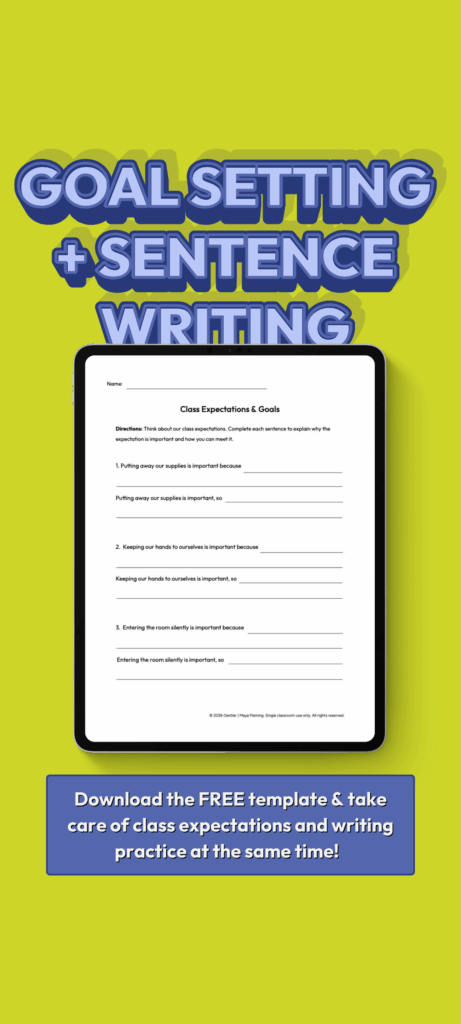
I use a student goal setting worksheet with sentence frames such as:
- “We should ___ because…”
- “We should ___, so…”
This type of student goal setting sheet helps students explain expectations in their own words while reinforcing sentence structure and cause-and-effect reasoning. It’s one of the simplest classroom management strategies that supports both behavior and academics, and it works especially well as a follow-up to class discussions. Click here to grab my FREE goal setting sheet template!
NON-NEGOTIABLE: Follow Through Every Time
Goal setting (like all other classroom management strategies) only works if actions consistently lead to outcomes. When teachers don’t follow through, students learn that expectations are optional.
If the goal is met, the incentive happens.
When it’s not, it doesn’t.
This consistency builds trust and reinforces accountability. Over time, students internalize expectations, and classroom management becomes proactive instead of reactive.
This is especially important right now. Cult of Pedagogy recently explored how discipline reform can miss the mark when expectations exist without consistent follow-through. Goal setting only works when students see that actions actually lead to outcomes.
It also helps to have a debrief conversation with students whether they earn the incentive or not. Talk about what they think helped them earn the incentive or what kept them from earning it and what they can do differently next time. Having a smaller (but attractive) incentive gives students more chances to get into the rhythm of meeting expectations without making them feel like it’s a pass/fail deal.
To Sum Up Classroom Management Strategies and Student Goal Setting
Effective goal setting in the classroom is about clarity, not control. When students know the goal, understand why it matters to them, and can clearly see the actions that move them closer to success, their behavior starts to shift. Not because they’re being micromanaged, but because they finally understand how their choices connect to real outcomes. Plus, they feel better about themselves because they start to understand that they made positive choices because they chose to and not because you made them (highlight that to them!)..
Goal setting works best when expectations are visible, meaningful, come with frequent reminders, and consistently reinforced. When you explain the “why,” involve students in the process, and follow through every time, you’re teaching skills that go far beyond the classroom: accountability, self-regulation, and ownership over learning. These are foundational strategies for classroom management, not add-ons.
And the best part? When students know what’s expected and why, you spend less time repeating directions, redirecting student talking, and putting out fires — and more time actually teaching.
A Quick Classroom Tool to Reinforce Expectations
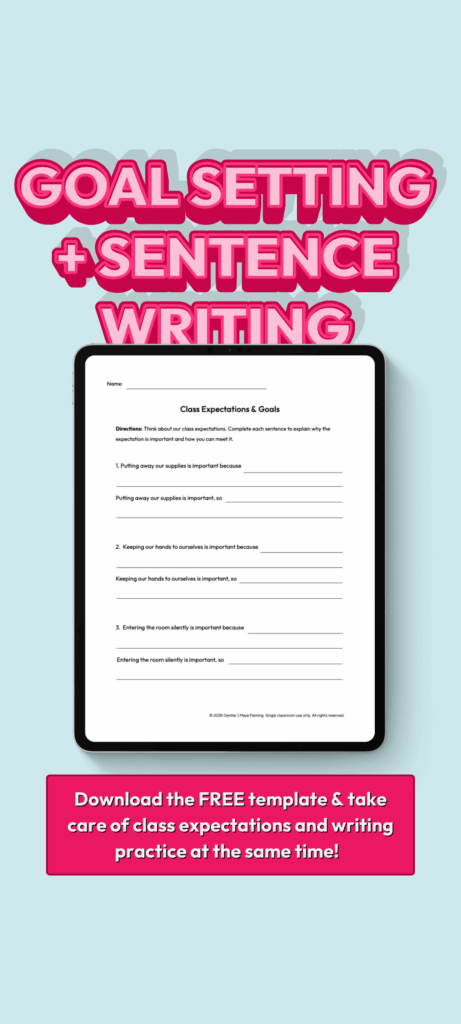
If you’re looking for a student-facing way to reinforce expectations through writing, I use a short goal-setting sentence sheet that helps students explain why expectations matter. It’s a simple way to turn a classroom conversation into something concrete students can process and revisit, making it one of the most effective classroom management strategies. You can grab the FREE template here!
Ready for Bigger, System-Level Support?
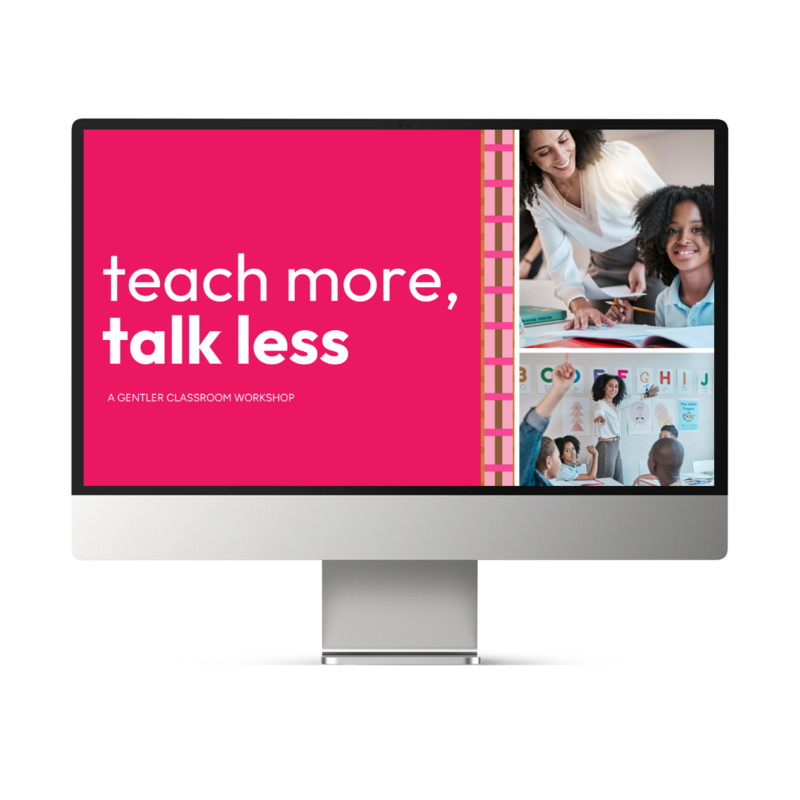
If you’re ready to reduce repeated directions and build systems that support student independence, Teach More, Talk Less walks you through how to do that step by step.
Want More Classroom Management Strategies That Allow You to Spend Less Time Talking and More Time Teaching?
If you’re tired of saying, “For the fifth time…” and want your classroom to run more smoothly without raising your voice or adding more systems, Teach More, Talk Less is the next step.
In this free workshop, I walk you through how to:
- clarify expectations so students don’t need constant reminders
- reduce repetitive teacher talk
- build systems that support student independence
If you’re ready for a calmer classroom where goals, expectations, and routines actually work together, you can check out the Teach More, Talk Less workshop here.



















+ show Comments
- Hide Comments
add a comment