


Learning targets and success criteria are often treated as compliance tools—but when used intentionally, they’re some of the most effective classroom management strategies you already have.
Let’s talk about one of the most underrated classroom management tools: clarity.
Not charts. Or fancy behavior systems. And it’s not another set of rules taped to the wall that the kids ignore by October. I’m talking about learning targets, success criteria, and exemplars—and how using them well can drastically reduce off-task behavior, repeated directions, and the dreaded “I’m done” papers that make you whisper, “WTF?” under your breath.
Because here’s the thing we usually forget when we’re knee-deep in behavior issues: the thing a lot of student behavior problems point to isn’t outright defiance. It’s confusion.
How to Use Learning Targets and Success Criteria as Classroom Management Strategies
Why Learning Targets and Success Criteria Matter (Not Just for Admin)
A learning target shouldn’t just be a box you check for admin. When we treat it that way, it becomes an instructional nuisance instead of a learning support. (Trust me—I was definitely the teacher with the same objective on the board for weeks. 🥴)
At its core, a learning target answers one simple question for students:
What am I supposed to be learning right now?
When that question is fuzzy, everything else starts to unravel. Students wander. They talk. Some start to rush. Others zone out (and doze off). It’s not because they don’t care. It’s often because they don’t know where to put their attention or why they should put it there.
A strong learning target keeps lessons focused and relevant for both you and your students, especially when it includes a “so I can…” element.

Writing strong learning targets is a skill of its own. If you want a step-by-step breakdown of how to write effective, student-friendly learning targets, I walk through that process in detail in this post.
Keep reading to focus on what happens after the learning target is written and how it functions as a classroom management tool when it’s used consistently.
How to Actually Use Your Learning Targets in Class Every Day
We want the learning targets we’re taking time to write to actually have a positive effect in our classrooms. Here’s how I do that:
- Before I start the lesson, I do a choral read of the learning target with my students.
- Then, I have students do a Think-Pair-Share of what the learning target means. Basically, they are discussing what we’ll be doing that day based on what the objective shares.
- I ask a student to share with the class what we’ll be learning and confirm or redirect, as needed.
Note: It’s easy for “student-friendly” to turn into “dumbed down.” We don’t want that. Be intentional about the words you replace and the words you define. For example, if there are expository terms that will likely show up on state testing, it’s best to take some time and ensure students know what they mean (and introduce them to the relevant syntax) rather than just replace it altogether in the learning target.
Throughout the lesson, I can check back in with the learning target, and I can give students opportunities to self-assess and share how comfortable they feel with the skill. I love using a simple finger rating system to check in on how they’re feeling. Using frequent checks for understanding aligned with the learning target also gives me evidence of mastery and let’s them see how they’re progressing, which builds confidence, in turn.
Now, Let’s Get to Success Criteria
If learning targets tell students what they’re working toward, success criteria tell them how to get there.
This is where a lot of classroom management issues quietly live. Students turn in work that technically matches the assignment but completely misses the mark. You give feedback that feels obvious. They look at you like you’re speaking another language. You (getting increasingly frustrated) remind them that you walked them through ALL of this and ask what they’ve been doing this whole time. They shut down. The end. Give me a minute…that brought up some bad memories. 🥴
Success criteria close that gap by making expectations visible, concrete, and checkable. Instead of guessing what “good” looks like, students can actually see it. Even better, success criteria allow students to self-assess while they’re working, not after the damage is done.
That alone cuts down on unfinished work, careless errors, constant teacher check-ins, and the “I don’t know howwwww” spirals that lead to unnecessary student talking.
How You Can Solve Problems *Before* They Happen
One of the biggest advantages of using learning targets and success criteria is how proactive they are.
You already know the common issues that show up in student work: run-ons, missing evidence, vague responses, unfinished answers. So instead of correcting the same mistake fourteen times, build those reminders directly into the success criteria.
This is where clarity becomes classroom management.
When you can say, “Don’t turn this in unless it meets the criteria,” you’re not being harsh. Rather, you’re being clear. And clarity removes guesswork, power struggles, and a lot of off-task behavior before it starts.
Show Students What “Good” Looks Like
Exemplars do more than improve work quality; they anchor student focus.
When students know exactly what they’re working toward, they’re less likely to rush, distract others, or declare themselves finished too early. I recommend showing a solid, on-level example and an advanced example for students who would benefit from an extra push.
Frame exemplars as student work, not a teacher model. That prevents them from thinking, “Well, of course it’s good! The teacher made it.” Instead, the example feels way more attainable for them when they believe it came from somewhere with their knowledge and skillset.
If exemplars are new to your students, take some time and examine them together:
- What makes this “good?”
- What does it do well?
- How could it be better?
- What ideas does it give you for your own work?
This supports students who need clarity and challenges students who are ready for more, without adding extra assignments. Just be sure to emphasize that students are to use it as a guide, NOT something to copy from. I talk more about exemplars and how I use them in this post.
RELATED: How to Teach Students What “Doing Your Best” Really Means
Also, exemplars can serve as an instructional guide for you, as well. When you look over the material you plan to use as an exemplar, ask yourself, “Have my students demonstrated mastery over the skills they’ll need to meet this expectation?” If not, you know what you need to teach. There’s nothing wrong with high expectations. We just need to make sure we’re supporting our students in meeting them.
Accountability (Without the Guilt)
Success criteria also make accountability neutral.
They can function as a checklist, a student-friendly rubric, or even a point-based guide. When work doesn’t meet the criteria, it gets revised during free time, support blocks, or homework—not as punishment, but as follow-through.
This is where instruction and classroom management intersect in a meaningful way. Students learn that expectations are real, visible, and connected to their choices. They also learn that their work quality matters. Give them a boost of confidence by mentioning something like, “I know you can produce better work than this.”
To Sum Up Using Learning Targets and Success Criteria as Classroom Management Strategies
When learning targets, success criteria, and exemplars work together, students aren’t guessing anymore. They know what they’re learning, what’s expected, and how to meet the expectation.
That clarity reduces off-task behavior, minimizes unfocused work, and eliminates so many of the “What are we supposed to be doing?” moments that drain your energy during the day.
And for you, it means less repeating directions, fewer power struggles, and more time actually teaching—which, if we’re being honest, is the goal.
If writing strong learning targets still feels tricky, I walk through that process step-by-step in my “How to Write Learning Targets” post. But once you have the targets written, the real magic is in how you use them consistently.
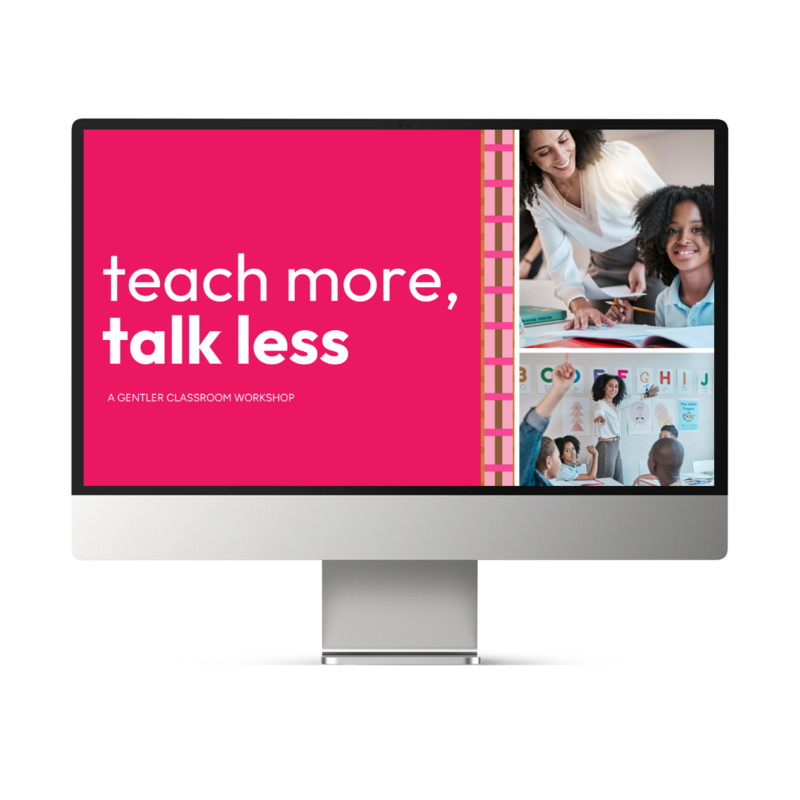
If you’re ready to stop talking over your class, reduce constant reminders, and build systems that support student independence, Teach More, Talk Less walks you through exactly how to do that—without adding another behavior chart or complicated routine. Click here to watch the FREE workshop!




















+ show Comments
- Hide Comments
add a comment